Refugee Week 2026 Impact Report

Refugee Week 2026: what we did, and what we learned


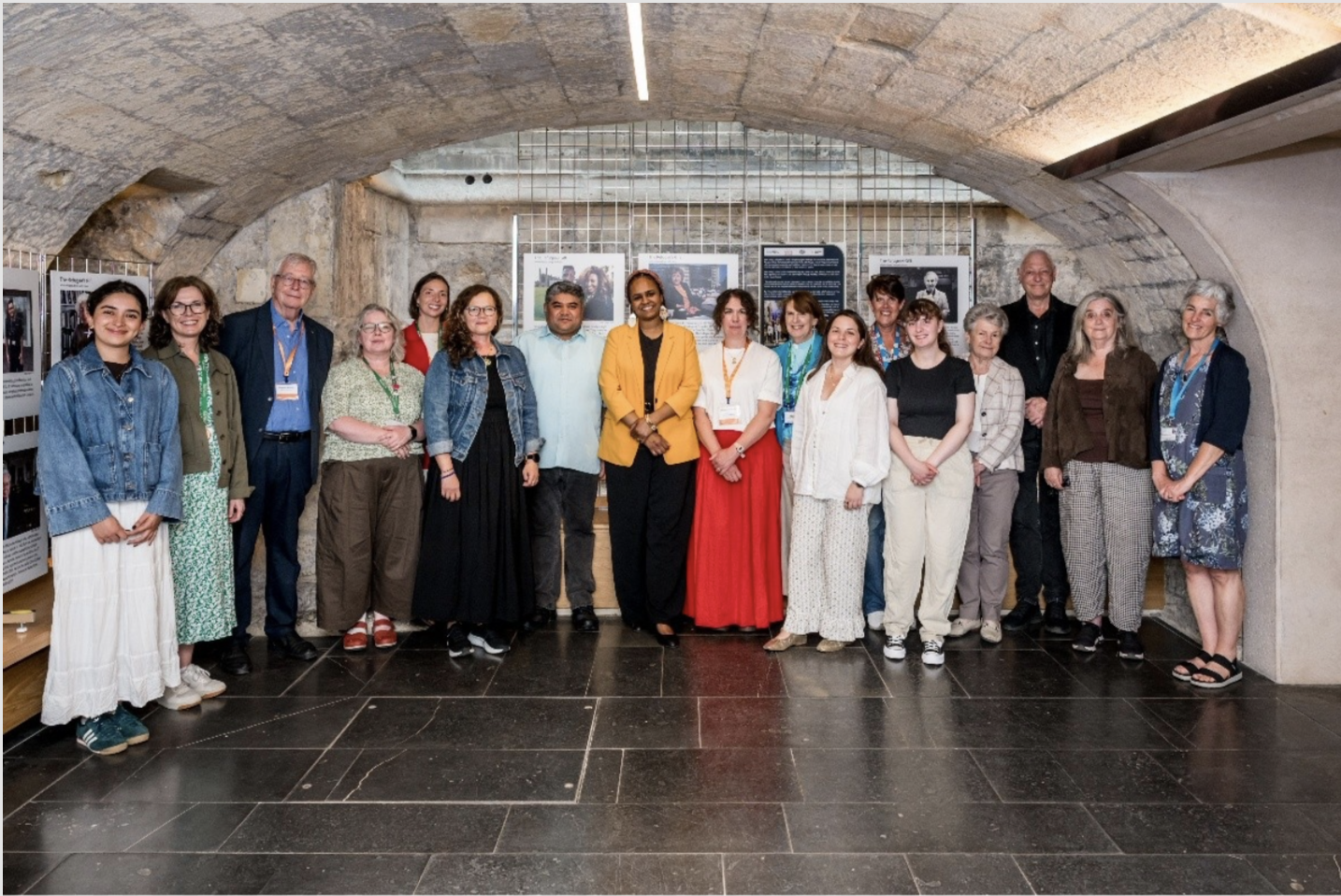
Refugee Week ran from 14-20 June this year, and Bath Welcomes Refugees put together nine events across the city to mark it. This year’s international theme was Courage, and rather than treat that as one big gesture, the programme looked at the many smaller forms it takes: speaking publicly about your own experience, keeping cultural traditions alive, or just navigating the asylum system and building a life somewhere unfamiliar.

Here’s what the week looked like, and what came out of it.

The numbers

  • 9 events across Bath
  • 700+ people attended
  • 34+ refugees and asylum seekers took part directly, as speakers, workshop participants, audience members and chefs
  • 30+ volunteers gave 150+ hours
  • 10 partner organisations
  • 41 artists and speakers involved
  • 7 new supporter/volunteer sign-ups
  • £1,600+ in value leveraged through volunteer time and in-kind support

What happened

The week opened with a walking tour led by the Mayor of Bath’s Honorary Guides, looking at the city’s history of welcoming refugees. From there it moved through a photography exhibition at Bath Abbey (Bill Kight’s “The Refugee’s Gift”, which pulled in over 300 visitors on its own), a Climate Hub session called Messages of Courage, a screening of the film Dreamers, and an ongoing textiles display at the Victoria Art Gallery done in partnership with the B&NES Resettlement Team.

Mid-week brought a Beyond Bath talk, “The Many Shapes of Courage,” and a community meal at the Lighthouse Centre in Twerton, cooked by three Afghan chefs in partnership with Bath Community Kitchen. There was also a storytelling and clay workshop at Bath Artists’ Studios, run by two BWR volunteers, Sasha and Andrea.

The week closed with the Bath Refugee Festival at Fairfield House, led by Sudafest, which drew 280 people.

One piece worth calling out on its own: Mir Miri, a member of BWR’s Advisory Group, shared a poem co-created with more than 50 members of the Afghan diaspora reflecting on what courage means. There was also a short recorded interview, made by BSU student Lucy Glover, with Lord Alf Dubs about the courage it took to place him on the Kindertransport out of Nazi-occupied Czechoslovakia at age seven.

What worked

Planning started early, back in January, in partnership with Sudafest, and open-access planning meetings meant local community members helped shape the programme from the start rather than just showing up to it. That seems to have paid off in a real sense of ownership among volunteers and contributors.

Accessibility stayed a priority throughout: every event was either free or offered free access for people on lower incomes. An optional £3 donation at booking brought in some extra income without undermining that.

The week also opened the door to new partnerships worth building on, particularly with the Frank Conversations Collective, who BWR wants to work with more as they develop their Coffee Conversations programme, spaces for people with different views on migration to talk to each other directly.

What didn’t, and what’s next

A few honest notes from the report:

  • Awareness was uneven. Despite promotion through social media, newsletters and partner networks, several events had unsold tickets or empty seats. There’s clearly more work to do reaching beyond BWR’s existing audience, and stronger local media partnerships are on the list for next year.
  • Some venues hit capacity while others under-filled, which is its own balancing act between affordability, accessibility and room size.
  • A grant application to help fund the programme didn’t come through this year, which put pressure on the budget. Securing more sustainable funding is a priority going forward, partly so BWR can pay guest speakers at least the Living Wage for their time.

Looking ahead, BWR wants to host more community meals year-round, expand the photography exhibition with more personal profiles of people with lived experience of seeking sanctuary, and keep building out the Beyond Bath talks based on direct audience feedback.

It was a genuinely full week, built by a lot of volunteers giving a lot of hours, and it’s clear from the report that the plan is to keep building on it rather than treat it as a one-off.

Back to Blog

Lord Dubs on Refugees, Hope, and Britain’s Moral Duty

In this moving interview, Lord Alf Dubs draws on his personal experience as a child refugee to make the case for a more compassionate and cooperative approach to asylum seekers and asks why Britain, which led the way in 1939, struggles to do the same today.

Back to Blog

A Collective Mosaic of Courage


Written by Mir Abdullah Miri

For this year’s Refugee Week, I created an anonymous online form asking Afghans in the diaspora to respond to four sentence starters: Courage sounds like…, Courage looks like…, Courage feels like…, and Courage needs…

The form was shared among friends, families, colleagues and community groups in different countries. Fifty-three (53!) people generously responded, and I put this collective piece together from their words.

A Collective Mosaic of Courage
When I asked about courage, people did not give me one answer.

I believe that makes sense because courage changes depending on where you are in life, what you have lost, what you are trying to protect, and who is depending on you.

Courage can be the strength to do something difficult. It can be the bravery people notice from outside. But in the words people shared, courage is also asking, waiting, caring, returning, learning, and trying again.

Sometimes courage sounds like a sentence as short as: 

“I will try.”

Not “I will win.”
Not “I am not afraid.”

Just, “I will try.”
Just “starting from somewhere.” 

For someone starting again in a new country, that is already a lot.

Courage sounds like starting over.
It sounds like speaking when your voice shakes.
It sounds like telling the truth when the truth is heavy in the mouth.
It sounds like saying, “I need help.”
It sounds like saying, “I was wrong.”
It sounds like saying, “I believe in this,” even when the room does not agree with you.

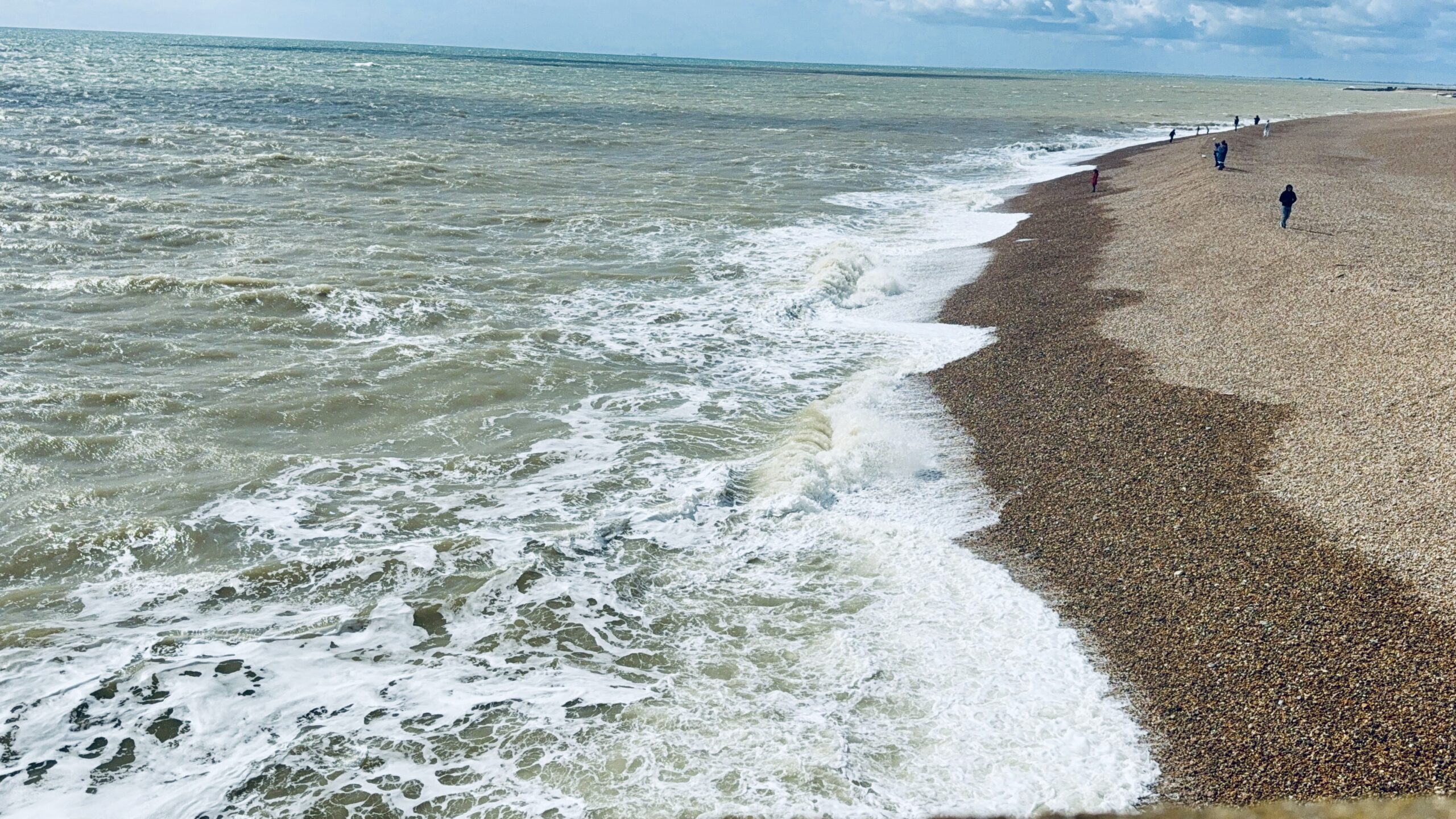
One person wrote that courage sounds like the sea.

Another wrote:

موج‌هایی که به ساحل برمی‌گردند
Waves that return to the shore.

I keep thinking about that.

A wave may not choose to return.
But people do.

Maybe the courage is not in the wave itself, but in the returning.

Again.
And again.
And again.

For many people rebuilding life after displacement, courage is the decision to return to life, to language, to family, to work, to yourself.

The kind of repetition that slowly becomes strength.

You wake up.
You answer an email you do not fully understand.
You go to an appointment.
You translate a letter for your parents.
You smile at someone while your mind is somewhere else.
You try a new word.
You get it wrong.
You try again.
You go home tired.

Tomorrow,
 دوباره.
Again.

Courage looks like getting up after every fall:
بلند شدن بعد از افتادن.

It looks like a mother’s hands holding too much.

It looks like “an Afghan woman”.

Let me stay there for a second.

Not as a symbol. As a person. 

Maybe she is in Afghanistan. Maybe she has left. Maybe she is carrying both places inside her.

Those two words carry a room, a border, a school gate, a closed door, and a voice that was told to be quiet but still found a way to travel.

Courage looks like standing alone, but standing anyway.
It looks like moving against the flow.
It looks like learning how to say no.

Not every no is rejection. Sometimes no is a boundary – it’s how a person protects the space they need to grow.

Like a plant growing where nobody prepared the soil.
Like a flame in a dark room.
Like water finding a path through stone.

But courage also lives in everyday things:

A CV rewritten.
Another job application sent.
A child taken to school.
A rent payment made.
A new bus route learned.
A phone call made with the heart beating fast.

Nobody claps for these things.

Still, they are courage.

When I asked what courage feels like, people did not pretend. 

They said:

Fear.
Hesitation.
Uncertainty.
Desperation.
A trembling voice.
A nervous body.
Fear and determination at the same time.
And the loneliness of carrying a journey not everyone can understand.

One person wrote:

امید در دل ترس
Hope in the heart of fear.

Not hope after fear has gone.

Hope inside it.

That feels true to me.

We often say courage does not mean having no fear. We hear it so often that we may stop really hearing it.

But in these answers, it became real again.

Fear, but moving anyway.
Fear, walked through anyway.
Breathing through fear.
Breathing after fear.
One more breath before the next thing.

And courage needs things.

This is important – because we sometimes talk about courage as if people should just produce it from inside themselves, like bread from an empty kitchen.

But courage needs time.
It needs support.
It needs patience.
It needs مهربانی, kindness.
It needs readiness – people who are ready to listen, stay and act. 
It needs good intentions that become action, and people who follow through.
It needs people who listen without judgement.
It needs understanding.
It needs a reason to keep going.

One person wrote that courage needs “one person who believes you.”

That line stayed with me.

One person who says, I hear you.
One person who does not rush you to finish your sentence.
One person who does not try to make your pain look neat.
One person who sees you before they see your case number.

Maybe courage begins inside us.

Maybe.

But it survives between us.

In Afghanistan, we say:

قطره قطره دریا می‌شود.
Drop by drop, it becomes a sea.

This mosaic is like that.

One word.
One phrase.
One memory.
One fear.
One person.
One breath.

Together, something gathers.

Not a perfect picture.

A mosaic always has gaps.
You can see the joins.
You can see where one piece does not quite fit the next.

I like that.

Our lives are also like that.

Carrying old pieces.
Putting some of them down.
Making room for new ones.
Uneven in places.
Still here.

So today, I will not define courage too neatly.

I will say only this:

Courage is “I will try.”
Courage is “I am still here.”
Courage is not only bravery. It is fear, care, and one more honest step.
Courage is returning.
Courage is “an Afghan woman”.
Courage is one more breath.

And courage, most days, is not loud.

It is someone carrying more than others can see, making tea, answering the next letter, learning the next word, and beginning again.

Acknowledgement

I’m grateful to the critical friends, practitioners, charity volunteers, community colleagues, and people with lived and living experience of displacement who reviewed earlier drafts and shared their insights. Their thoughtful feedback helped me approach this piece, and the words gathered in it, with greater care.

Mir Abdullah Miri (Mir) is one of our valued volunteers. A refugee scholar from Afghanistan, Mir has been connected with BWR as a client and continues to contribute as an Education Advisor and member of our Community Advisory Group.

For readers interested in the place of hope in experiences of migration and displacement, Mir has written a related reflection here: Why I Speak of Hope.

Back to Blog

Bath Welcomes Refugees is recruiting Trustees

Would you like to make a difference in the lives of refugees and asylum seekers living in Bath?

If you are passionate about welcoming people seeking safety in the UK and have lived experience as a refugee or asylum seeker or experience in charity governance, asylum and refugee law, therapeutic care, finance or communications we’d love to hear from you!

We are looking to recruit Trustees with the skills, experience, energy, and time to commit to our vital work. 

What will you be doing?

Our Trustee Board is responsible for the governance of Bath Welcomes Refugees. The Board does not directly manage the day-to-day work, but provides oversight, shapes organisational strategy and supports our staff and volunteers.

Specific activities include bi-monthly trustee meetings, the Annual General Meeting, and ad hoc attendance at fundraising/promotional events. As a small charity, there will be times when the trustees will need to be actively involved beyond Board meetings. 

What difference will you make?

Bath Welcomes Refugees is a small, dynamic local organisation that continues to grow and develop. In the past two years, the scope and volume of our work has expanded considerably. The new trustees will support us to ensure we have a strong strategy and robust governance to consolidate our growth and meet our mission. 

Trustees will bring crucial insights and guidance from their own backgrounds, as we continue to refine our strategy, strengthen our structure and fundraising, and manage risk. This is your opportunity to be part of a respectful, inclusive, friendly team and make a difference in the lives of people living in Bath and North East Somerset.

What are we looking for?

We are looking for people willing to bring energy, enthusiasm, and commitment to the role, and who will broaden the diversity of experience and thinking on our board. 

We are particularly looking for people with experience in the following:

  • Experience or knowledge of refugee resettlement and therapeutic and other issues facing refugees and asylum seekers such as asylum and refugee law or educational challenges
  • Experience of the UK charity sector, especially management and/or governance
  • Experience of Financial leadership including the role of Treasurer and fundraising
  • Communications, marketing, and social media

What we can offer you

  • Experience of strategy and leadership in the charity sector
  • The opportunity to be part of a friendly passionate team, applying your unique skills and experience while learning from others
  • Access to training on charity governance, safeguarding, refugee welfare and rights, and other relevant topics
  • Reimbursement of reasonable expenses

Please see the role description document.

How to apply

Please send your CV with a one-page covering letter to
[email protected]

We aim to hold interviews in the week commencing

We welcome applications from people with characteristics that are often underrepresented on charity boards, including disabled people, women, people of colour, those who identify as LGBTQ+, and young people.

If you are passionate about welcoming refugees and asylum seekers and want to be involved in growing a small charity, we welcome your application. If you don’t meet the above criteria but still want to be a trustee or get involved in another capacity, we would still love to hear from you. 

For an informal chat about the roles, please get in touch with our Chair of Trustees, [email protected]

Back to Blog