
Written by Mir Abdullah Miri
For this year’s Refugee Week, I created an anonymous online form asking Afghans in the diaspora to respond to four sentence starters: Courage sounds like…, Courage looks like…, Courage feels like…, and Courage needs…
The form was shared among friends, families, colleagues and community groups in different countries. Fifty-three (53!) people generously responded, and I put this collective piece together from their words.
A Collective Mosaic of Courage
When I asked about courage, people did not give me one answer.
I believe that makes sense because courage changes depending on where you are in life, what you have lost, what you are trying to protect, and who is depending on you.
Courage can be the strength to do something difficult. It can be the bravery people notice from outside. But in the words people shared, courage is also asking, waiting, caring, returning, learning, and trying again.
Sometimes courage sounds like a sentence as short as:
“I will try.”
Not “I will win.”
Not “I am not afraid.”
Just, “I will try.”
Just “starting from somewhere.”
For someone starting again in a new country, that is already a lot.
Courage sounds like starting over.
It sounds like speaking when your voice shakes.
It sounds like telling the truth when the truth is heavy in the mouth.
It sounds like saying, “I need help.”
It sounds like saying, “I was wrong.”
It sounds like saying, “I believe in this,” even when the room does not agree with you.
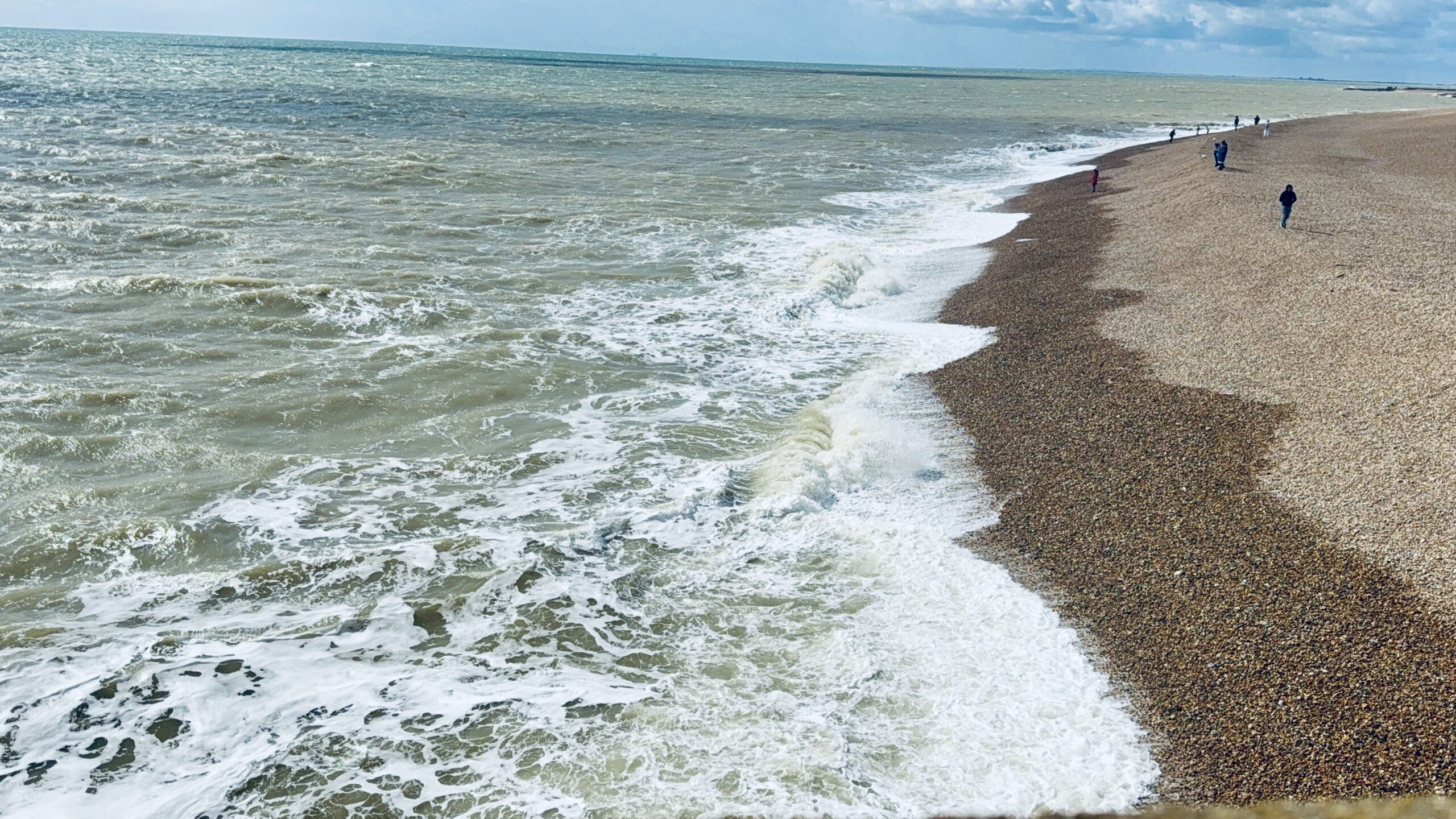
One person wrote that courage sounds like the sea.
Another wrote:
موجهایی که به ساحل برمیگردند
Waves that return to the shore.
I keep thinking about that.
A wave may not choose to return.
But people do.
Maybe the courage is not in the wave itself, but in the returning.
Again.
And again.
And again.
For many people rebuilding life after displacement, courage is the decision to return to life, to language, to family, to work, to yourself.
The kind of repetition that slowly becomes strength.
You wake up.
You answer an email you do not fully understand.
You go to an appointment.
You translate a letter for your parents.
You smile at someone while your mind is somewhere else.
You try a new word.
You get it wrong.
You try again.
You go home tired.
Tomorrow,
دوباره.
Again.
Courage looks like getting up after every fall:
بلند شدن بعد از افتادن.
It looks like a mother’s hands holding too much.
It looks like “an Afghan woman”.
Let me stay there for a second.
Not as a symbol. As a person.
Maybe she is in Afghanistan. Maybe she has left. Maybe she is carrying both places inside her.
Those two words carry a room, a border, a school gate, a closed door, and a voice that was told to be quiet but still found a way to travel.
Courage looks like standing alone, but standing anyway.
It looks like moving against the flow.
It looks like learning how to say no.
Not every no is rejection. Sometimes no is a boundary – it’s how a person protects the space they need to grow.
Like a plant growing where nobody prepared the soil.
Like a flame in a dark room.
Like water finding a path through stone.
But courage also lives in everyday things:
A CV rewritten.
Another job application sent.
A child taken to school.
A rent payment made.
A new bus route learned.
A phone call made with the heart beating fast.
Nobody claps for these things.
Still, they are courage.
When I asked what courage feels like, people did not pretend.
They said:
Fear.
Hesitation.
Uncertainty.
Desperation.
A trembling voice.
A nervous body.
Fear and determination at the same time.
And the loneliness of carrying a journey not everyone can understand.
One person wrote:
امید در دل ترس
Hope in the heart of fear.
Not hope after fear has gone.
Hope inside it.
That feels true to me.
We often say courage does not mean having no fear. We hear it so often that we may stop really hearing it.
But in these answers, it became real again.
Fear, but moving anyway.
Fear, walked through anyway.
Breathing through fear.
Breathing after fear.
One more breath before the next thing.
And courage needs things.
This is important – because we sometimes talk about courage as if people should just produce it from inside themselves, like bread from an empty kitchen.
But courage needs time.
It needs support.
It needs patience.
It needs مهربانی, kindness.
It needs readiness – people who are ready to listen, stay and act.
It needs good intentions that become action, and people who follow through.
It needs people who listen without judgement.
It needs understanding.
It needs a reason to keep going.
One person wrote that courage needs “one person who believes you.”
That line stayed with me.
One person who says, I hear you.
One person who does not rush you to finish your sentence.
One person who does not try to make your pain look neat.
One person who sees you before they see your case number.
Maybe courage begins inside us.
Maybe.
But it survives between us.
In Afghanistan, we say:
قطره قطره دریا میشود.
Drop by drop, it becomes a sea.
This mosaic is like that.
One word.
One phrase.
One memory.
One fear.
One person.
One breath.
Together, something gathers.
Not a perfect picture.
A mosaic always has gaps.
You can see the joins.
You can see where one piece does not quite fit the next.
I like that.
Our lives are also like that.
Carrying old pieces.
Putting some of them down.
Making room for new ones.
Uneven in places.
Still here.
So today, I will not define courage too neatly.
I will say only this:
Courage is “I will try.”
Courage is “I am still here.”
Courage is not only bravery. It is fear, care, and one more honest step.
Courage is returning.
Courage is “an Afghan woman”.
Courage is one more breath.
And courage, most days, is not loud.
It is someone carrying more than others can see, making tea, answering the next letter, learning the next word, and beginning again.
Acknowledgement
I’m grateful to the critical friends, practitioners, charity volunteers, community colleagues, and people with lived and living experience of displacement who reviewed earlier drafts and shared their insights. Their thoughtful feedback helped me approach this piece, and the words gathered in it, with greater care.
Mir Abdullah Miri (Mir) is one of our valued volunteers. A refugee scholar from Afghanistan, Mir has been connected with BWR as a client and continues to contribute as an Education Advisor and member of our Community Advisory Group.
For readers interested in the place of hope in experiences of migration and displacement, Mir has written a related reflection here: Why I Speak of Hope.